6 Safe Travel Destinations in South America
South America often faces negative perceptions regarding safety. Simply mentioning the continent may evoke thoughts of political instability and high crime rates. However, while certain regions do struggle with these issues, numerous areas are completely safe for travelers.
To ensure a secure experience, adhere to basic safety precautions—avoid flashy clothing and jewelry, carry only small amounts of cash, and steer clear of dark or isolated places after sunset. As is true for any travel destination, it’s wise to exercise common sense, research your locations, and prepare accordingly. (See also: 4 Affordable Destinations That Are Safer Than You Think)
Below are six safe travel destinations in South America.
1. Buenos Aires, Argentina
Often called the Paris of South America, Buenos Aires boasts a unique European charm. Its outdoor cafés and varied cuisine—drawing influence from Italian, German, and Spanish traditions—reflect the city’s rich history of European immigration.
Experience tango in its birthplace, indulge in some world-renowned Argentinian wine, and make sure to try asado (barbecue) at one of the lively parrilla restaurants. Many eateries don’t open until 11 p.m., and nightlife continues until dawn. This city thrives on its vibrant, sleepless atmosphere.
Currently, the Department of State has issued no travel warnings for Argentina.
2. Medellin, Colombia
Colombia was once notorious for its violent drug lords, including the infamous Pablo Escobar. Nevertheless, Medellin has made remarkable strides to improve its image in recent years, with significant transformations clearly visible.
As Colombia’s third-largest city, Medellin has received several accolades for its innovative urban design over the last decade. Known as the “City of Eternal Spring,” it attracts tourists with its pleasant climate year-round.
Although Colombia has a level two travel advisory, Medellin is not specifically mentioned as a place to avoid. (See also: 8 Travel Warnings You Shouldn’t Ignore)
3. Colonia del Sacramento, Uruguay
Often overlooked in favor of its larger neighbors, Uruguay is frequently regarded as a simple side trip from Argentina. However, it possesses its own distinct charm, and Colonia del Sacramento is the perfect introduction to this laid-back country.
This tranquil town is a haven for those who appreciate a slower pace of life, highlighted by its historic buildings, cobblestone streets, and small-town ambience. The preserved historic district, featuring a blend of Spanish and Portuguese colonial structures, is the main attraction.
Crime is virtually nonexistent in Colonia del Sacramento, and travel advisories are currently at the lowest level, with no warnings in effect. (See also: 7 Common Travel Myths That People Need to Stop Believing)
4. Santiago, Chile
The capital city of Chile, Santiago, is a modern and elegant metropolis. The central area radiates from the expansive Palacio de la Moneda, and many streets have been designated for pedestrian use. Upscale restaurants and hotels abound in neighborhoods like Providencia.
Santiago’s location in a valley surrounded by mountains provides ample opportunities for outdoor recreation. The city also boasts elevated parks and viewpoints that present stunning vistas.
Chile currently has no travel warnings and maintains a level one safety advisory.
5. Florianopolis, Brazil
In contrast to the bustling megacities of Rio de Janeiro and São Paulo, Florianópolis remains relatively undiscovered. Most of the city is spread across an island off Brazil’s Atlantic coast, connected by two bridges. Locally known as “Floripa,” it is a relaxed, artistic, and popular destination for Brazilian tourists.
The vibrant city center is filled with a wide range of international dining options, trendy cafés, and energetic bars. With diverse landscapes—sandy white beaches, lush forests, lagoons, and waterfalls—Floripa offers plenty of opportunities to unwind in nature.
Although certain parts of Brazil may experience higher crime rates, these areas are localized, and the overall travel advisory is at two with no specific concerns mentioned regarding Florianópolis. (See also: 7 Ways to Manage Your Travel Anxiety)
6. Copacabana, Bolivia
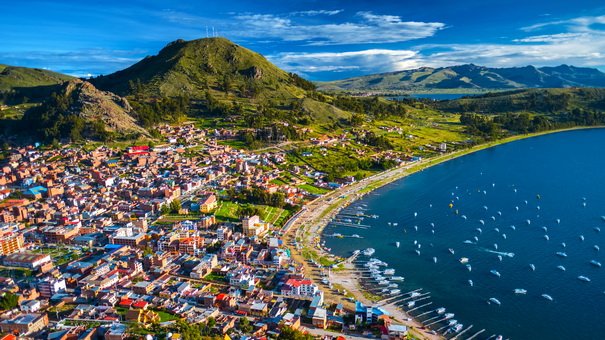
Titicaca, one of the largest lakes in South America, spans both Bolivia and Peru. Unusually, it is located at a high altitude, exceeding 12,500 feet above sea level in the Andes. On its shores, the Bolivian town of Copacabana is particularly popular among visitors.
The town itself is modest in appearance, yet its proximity to the monumental lake makes it a significant attraction. The expansive lake invites exploration, with opportunities for hiking the nearby hills, visiting indigenous communities on Isla del Sol, and learning about ancient Inca traditions.
Bolivia holds a level one travel advisory, and Copacabana is widely regarded as a safe destination.