4 Ways a Home Energy Audit Can Cut Your Costs
If you find yourself grappling with high utility expenses at home, you’re not alone. According to the U.S. Energy Information Administration, the average electric bill for households in the U.S. was reported to exceed $114 monthly in 2014. Furthermore, homes that utilize natural gas are forecasted to incur approximately $578 during winter months for heating needs.
Should your gas and electric bills seem excessive, consulting an energy auditor for a home energy audit could be beneficial. An auditor will evaluate your property, conducting various tests to pinpoint energy loss areas, possibly enabling you to reduce your utility expenses by 15% or more.
Explore these four ways a home energy audit could contribute to your savings.
Encourage the Installation of Efficient Windows
An energy auditor pays special attention to your windows. Poorly sealed windows can lead to higher costs for heating and cooling, as they allow conditioned air to escape. Consequently, your heating and cooling systems operate less efficiently, consuming additional energy, which ultimately affects your wallet.
The U.S. Environmental Protection Agency’s ENERGY STAR program indicates that swapping out old single-pane windows for ENERGY STAR-qualified alternatives could lead to annual savings ranging from $126 to $465. While replacing inefficient double-pane windows yields lower savings, at about $27 to $111 per year, it’s still a worthwhile consideration according to ENERGY STAR.
Spot Additional Leaks in Your Home’s Structure
Air can escape through various fissures in your home’s exterior. To assess this, energy auditors will employ a blower door test. This method involves a powerful fan placed in an exterior door frame, which reduces the air pressure inside your home.
As a result, the higher outside air pressure forces its way in through unsealed gaps. The auditor can use specialized tools to identify the volume and locations of air leaks, allowing you to seal them and consequently lower your energy bills.
Assess the Need for More Insulation
The audit can also reveal if your walls are inadequately insulated. The U.S. Environmental Protection Agency estimates that homeowners can achieve an average savings of 15% on heating and cooling bills or around 11% on total energy costs through effective air sealing and proper insulation in attics and walls.
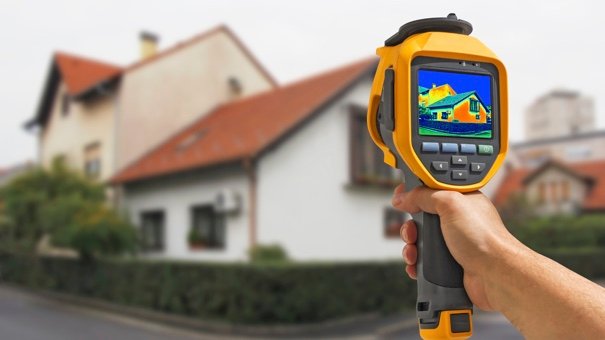
During the inspection, auditors utilize thermal imaging cameras to identify temperature variations in walls and flooring, indicating areas where insulation may be lacking. Upgrading to more efficient insulation can noticeably enhance your monthly energy savings.
Prompt the Replacement of Aging Appliances
While you may take pride in your washing machine that has endured for 20 years or your 15-year-old refrigerator, these older appliances may be unnecessarily inflating your utility costs each month.
The U.S. Department of Energy estimates that appliances contribute about 13% to the overall energy expenditure of a household. Thus, investing in newer, more energy-efficient models could provide substantial savings.
The Department states that ENERGY STAR-rated washing machines and refrigerators are about 20% more efficient than conventional options. For dishwashers, ENERGY STAR-qualified models use approximately 5.8 gallons of water per cycle, a significant decrease compared to older models that tend to use over 10 gallons per cycle.
While initial costs for these energy-efficient appliances may be higher, the long-term savings can make it worthwhile. Conduct some calculations to see how quickly your energy savings could surpass the additional expense associated with purchasing these modern appliances.
Have you previously undergone an energy audit in your home? What insights did it provide regarding your energy consumption?